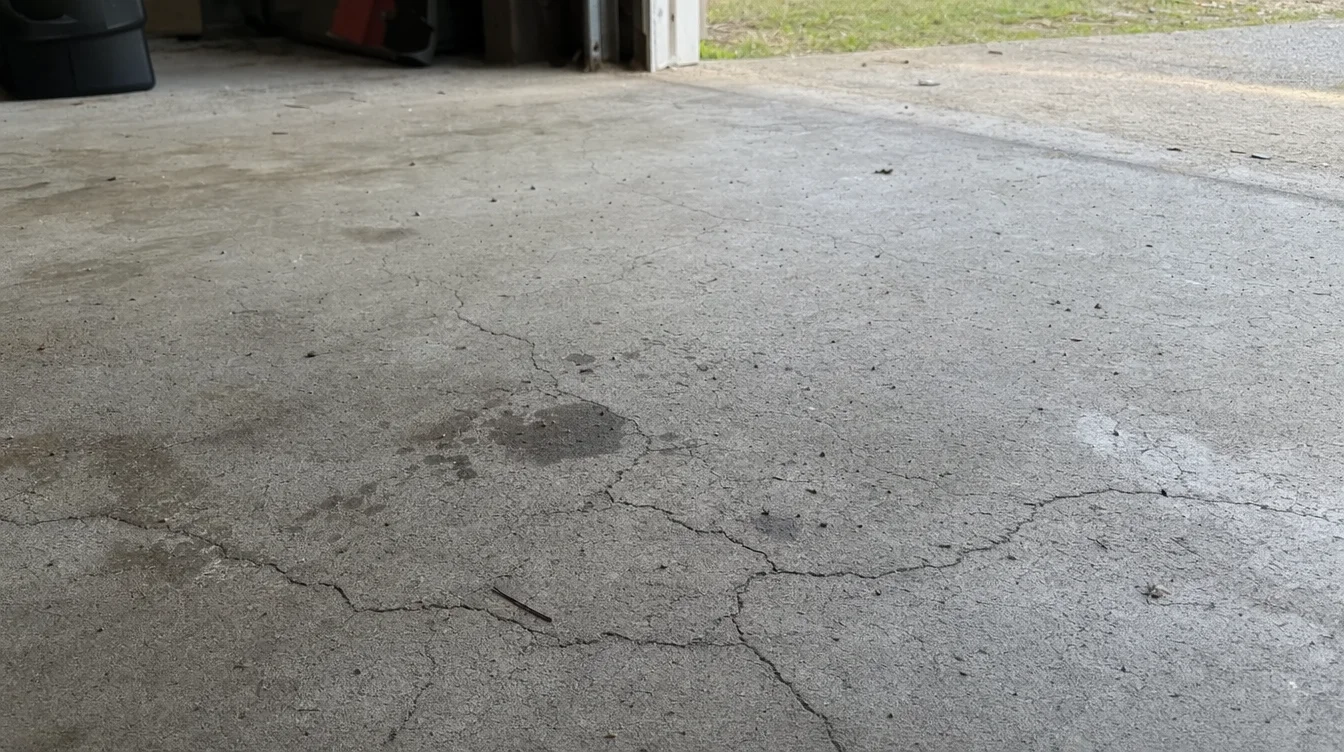
If your bare concrete floor is dusting under your feet, cracking along old control joints, or holding onto oil stains no cleaner will touch, those are the signs you need epoxy flooring in Nashville before the slab gets worse. Bare concrete doesn't fail all at once - it degrades gradually, and by the time the damage is obvious, the repair scope (and cost) has usually grown. Here's what to watch for and why Nashville's climate makes the timeline shorter than homeowners expect.
The Warning Signs Nashville Property Owners Ignore Too Long
Most Nashville garages, basements, and commercial floors we inspect show at least two or three of these signs before anyone calls for a quote. Individually they seem minor. Together, they mean the concrete's surface is actively deteriorating:
- Dusting or spalling - a fine gray powder on the surface that transfers to shoes, tires, and stored items
- Oil stains that won't lift - no degreaser or pressure washing fully removes them because they've soaked into porous concrete
- Visible cracks widening over time - hairline cracks that were barely noticeable a year ago now catch a fingernail
- Moisture wicking through the slab - damp patches or a musty smell with no obvious water source, common in Nashville's clay soil
- Safety and slip hazards - worn, pitted, or dusty surfaces that get slick when wet
Cracking and Pitting: When Concrete Damage Signals It's Time
Not every crack means the same thing, and knowing the difference helps you plan the right fix instead of over- or under-reacting:
Dust, Stains and Moisture: The Hidden Costs of Bare Concrete
Unsealed concrete is porous, and that porosity is the source of most of the everyday problems Nashville property owners deal with. Concrete dusting happens as the surface paste wears away, releasing fine particles that get tracked through the house or facility. Oil and chemical stains soak below the surface rather than sitting on top of it, which is why scrubbing rarely restores the original color.
The costliest hidden issue is moisture. Nashville's clay-heavy soil holds water and transmits it upward through a slab over time - a process that's invisible until it causes a coating to bubble or peel, or leaves a persistent damp smell in a basement or ground-floor commercial space.
Why we test before we coat: ProEpoxy Nashville performs moisture testing (ASTM F1869 and F2170) as part of every assessment. Coating over a slab with excess moisture vapor transmission is the single most common cause of early epoxy failure - testing first prevents that.
How Nashville's Climate Accelerates Concrete Wear
Nashville doesn't get the freeze-thaw cycling that damages concrete further north, but the combination of high humidity and intense summer heat creates its own set of stressors on an unprotected slab:
| Climate Factor | Effect on Bare Concrete |
|---|---|
| Summer humidity (70–85% RH) | Drives moisture vapor transmission through the slab, worsening dampness and future coating risk |
| Daily thermal cycling | Repeated expansion and contraction stresses the surface, widening existing hairline cracks |
| Heavy rain + clay soil | Slower drainage around foundations increases subsurface moisture wicking into slabs |
| UV exposure at open garage doors | Gradual surface discoloration and increased brittleness on unsealed concrete |
None of this means Nashville concrete is unusually fragile - it means bare, unsealed concrete has no protection against conditions the region deals with every year. An epoxy flooring Nashville system with the right moisture-barrier primer addresses all four factors at once, which is why it outperforms sealers or paint-on coatings that skip surface prep and moisture testing.
If your floor already shows visible damage rather than early warning signs, our epoxy floor repair Nashville guide covers what's involved in crack injection and delamination repair before a fresh coating goes down.
Once you've confirmed your floor needs replacing, our guide on garage floor prep steps walks through exactly what proper surface preparation involves before a new coating goes down.