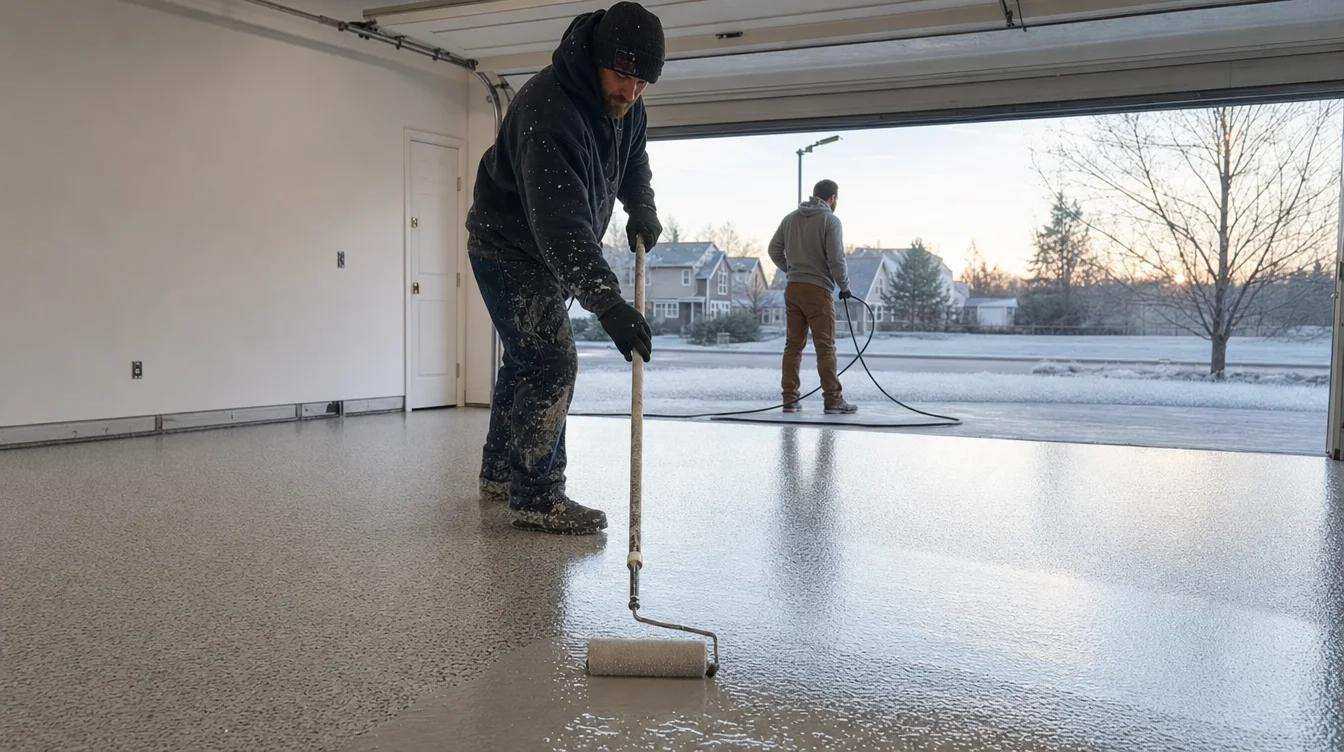
Polyaspartic cold weather installation in Nashville is not only possible, it's often the better choice once temperatures drop - this fast-cure coating handles the cold far more reliably than standard epoxy. If you've been holding off on a floor coating project because you assumed winter was off the table, here's why that assumption doesn't hold for polyaspartic, and what a Nashville winter install actually looks like.
Why Cold Weather Challenges Standard Epoxy Installation
Standard epoxy cure chemistry is temperature-dependent. Below roughly 50°F, the resin/hardener reaction slows dramatically - what would normally cure in 24 hours can stretch out unpredictably, and there's a real risk of an incomplete or compromised cure if the slab or ambient air stays cold through the curing window. This is why most epoxy installers push winter projects to spring.
- Slowed chemical reaction - cold temperatures reduce the rate of epoxy's cure chemistry
- Extended recoat windows - multi-coat systems take longer to build between layers
- Risk of incomplete cure - a floor that doesn't fully cure can have reduced hardness and durability
How Polyaspartic Handles Low Temperatures
Polyaspartic is formulated specifically for a wider temperature tolerance than standard epoxy. Its cure chemistry isn't nearly as sensitive to cold ambient or slab temperatures, which means a Nashville winter install can proceed on a schedule much closer to what you'd see in spring or summer - without the extended, unpredictable cure windows that come with cold-weather epoxy.
Nashville Winter Installation Best Practices
Even with polyaspartic's cold tolerance, a few conditions still matter for the best possible result:
- Slab temperature check - the concrete surface itself, not just ambient air, needs to be within the product's application range
- Moisture testing still applies - cold weather doesn't change the need to test for moisture vapor transmission before coating
- Morning scheduling - installs are often scheduled for the warmest part of a Nashville winter day to give the best working conditions
Nashville's mild winters help: Unlike areas with sustained sub-freezing temperatures, Nashville's winter days frequently climb into a workable range even when mornings start frosty - which is part of why polyaspartic performs so reliably here through the colder months.
When to Schedule a Winter Polyaspartic Project
Winter is typically a slower season for Nashville flooring contractors, which often translates to more scheduling flexibility and faster turnaround than the busy spring and summer months when demand peaks. If you've been waiting for the "right time" to coat a garage, basement, or commercial floor, a polyaspartic winter install can actually mean getting on the schedule faster.
If you're dealing with concrete that's already showing seasonal wear, our related guide on Nashville freeze-thaw concrete protection covers how coatings protect a slab through temperature swings. See our polyaspartic floor coating Nashville page for the full system details.
That same fast-cure chemistry is also what makes a polyaspartic one-day install process possible, regardless of season.