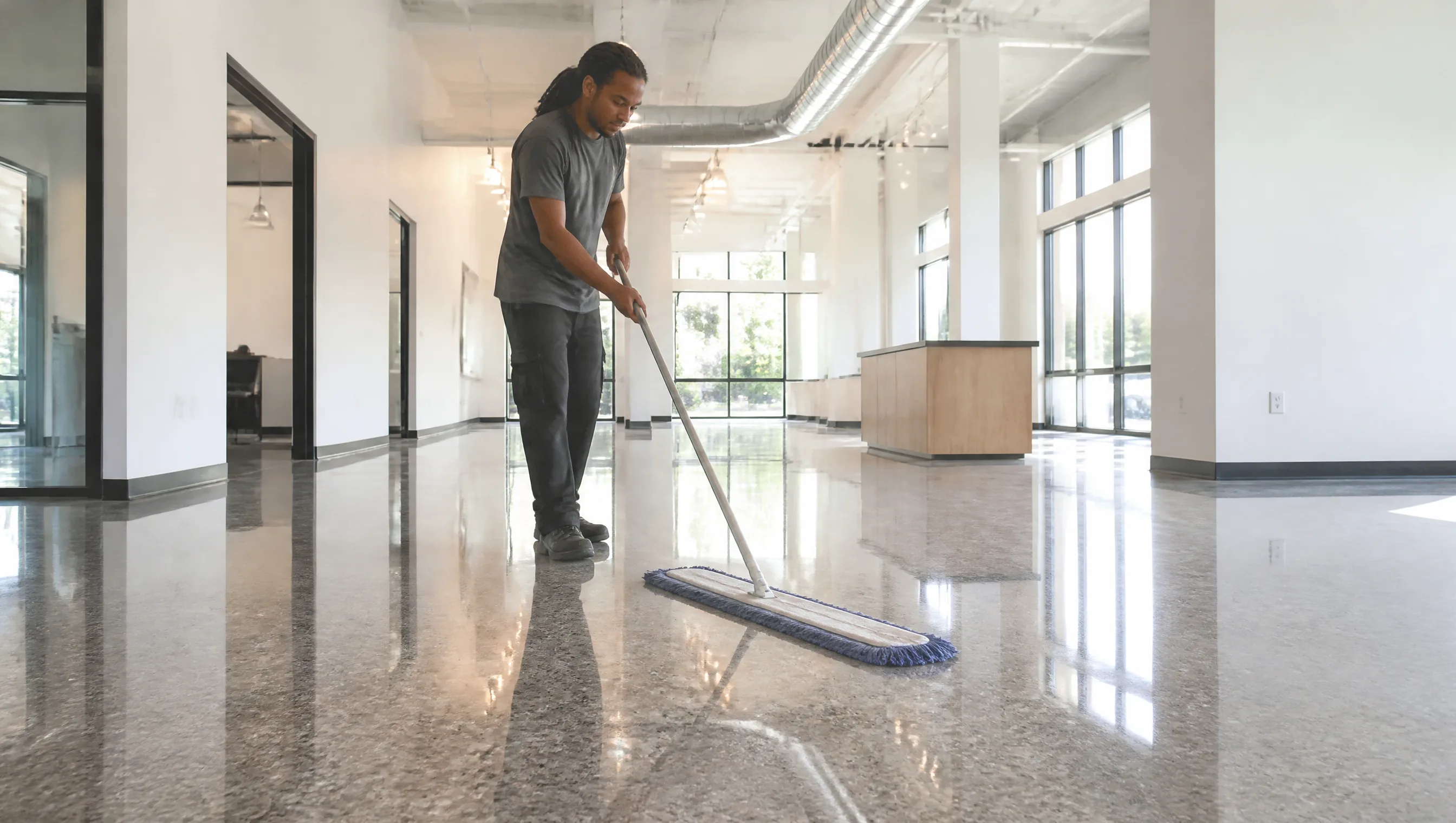
Polished concrete maintenance in Nashville is refreshingly simple compared to almost any other flooring type - no waxing, no re-coating, no annual sealing schedule. The routine that keeps a polished concrete floor looking sharp for decades comes down to a handful of consistent daily and weekly habits, plus knowing how to react quickly when something spills.
Whether you're maintaining a polished concrete floor in a Green Hills retail space, a Wedgewood-Houston loft conversion, or a residential basement, the fundamentals are the same. Get the routine right early and you'll rarely think about your floor again beyond the occasional burnishing pass.
Daily and Weekly Polished Concrete Maintenance
The single most important habit for polished concrete is regular dust mopping. Loose grit, sand, and debris tracked in from outside act like fine sandpaper under foot traffic, and over time that abrasion is what dulls a polished surface - not the traffic itself, but what's riding along with it.
- Commercial spaces: dust mop daily, more often in high-traffic areas near entrances
- Residential spaces: dust mop two to three times per week is typically sufficient
- Weekly deep clean: damp mop with a neutral pH cleaner formulated for polished concrete, rinsing the mop head frequently to avoid redepositing grit
- Entry mats: place walk-off mats at exterior entrances to capture grit before it ever reaches the polished surface
Avoid dry sweeping with a stiff-bristled broom as your primary cleaning method - it tends to push grit around rather than lift it, and a microfiber dust mop or a properly maintained auto-scrubber does a noticeably better job in both commercial and residential settings.
Why Polished Concrete Never Needs Waxing
One of the most common misconceptions we hear from new polished concrete owners is that the floor needs to be waxed periodically to maintain its shine, the way a traditional VCT tile floor would. Polished concrete works completely differently - its gloss comes from mechanical grinding through progressively finer diamond abrasives, not from a topical coating sitting on the surface.
Applying wax to polished concrete is not just unnecessary, it's actively counterproductive. Wax sits on top of the ground and densified surface, and over time it builds up a hazy film that actually dulls the natural reflectivity the grinding process created. If a floor starts looking cloudy, wax buildup from a well-meaning maintenance crew using the wrong products is one of the most common culprits.
If your floor already has wax on it: A professional stripping pass followed by a light re-burnish will typically restore the original polished finish without needing a full re-grind.
Handling Spills and Preventing Etching
Polished concrete is durable, but it's still concrete - a calcium-based material that reacts chemically with acids. Spills from wine, coffee, citrus juice, vinegar-based dressings, and some cleaning products can etch the surface if left to sit, leaving a dull, slightly rough spot that's noticeably different from the surrounding gloss.
The fix is simple: wipe spills promptly, especially anything acidic. A quick wipe within a few minutes rarely causes any lasting mark, while the same spill left overnight is far more likely to etch. Keep a neutral pH cleaner on hand for cleanup rather than reaching for whatever's under the sink - many common household cleaners are acidic or alkaline enough to contribute to the same problem over repeated use.
| Substance | Etching Risk | Recommended Action |
|---|---|---|
| Wine, coffee, citrus juice | High | Wipe immediately |
| Vinegar-based dressings | High | Wipe immediately |
| Water, most food spills | Low | Clean during routine mopping |
| Ammonia or bleach cleaners | Moderate | Avoid using on polished concrete |
Periodic Re-Polishing Schedule
Even with a good daily and weekly routine, polished concrete gradually loses some of its peak reflectivity over years of foot traffic. The fix is a burnishing or re-polishing pass, not a full re-grind - a much smaller and less disruptive service than the original installation.
Skipping re-polishing entirely doesn't damage the floor structurally, but it does mean the surface gradually loses the high-gloss look it had on day one. Owners who want to keep that showroom appearance long-term are better off scheduling a burnishing pass proactively rather than waiting until the floor looks visibly worn. For a deeper look at how gloss level and maintenance interact, see our guide to polished concrete shine levels.
See our concrete polishing Nashville page for the full grinding, densifying, and polishing process if your floor needs more than routine maintenance. And if you're still deciding on a gloss level or budgeting a new installation, our polished concrete cost breakdown covers how maintenance factors into the total cost of ownership over time.
Common Maintenance Mistakes to Avoid
Most of the polished concrete floors we get called out to repair or re-polish early aren't suffering from a manufacturing defect or a bad install - they're suffering from a maintenance routine that worked fine on a different flooring type but doesn't translate to polished concrete. A few specific mistakes come up again and again.
- Using vinegar or citrus-based "natural" cleaners: these are marketed as gentle, but they're acidic enough to etch polished concrete over repeated use, especially in kitchens where they get used weekly
- Dry sweeping with a stiff broom instead of dust mopping: a broom pushes grit around the surface rather than lifting it, which grinds in fine scratches over time
- Applying floor wax or acrylic finish "to be safe": this is the single most common mistake on floors converted from a previous tile or VCT installation, where the maintenance crew keeps using their old routine out of habit
- Letting a janitorial contract default to generic all-purpose cleaner: most commercial cleaning contracts don't specify polished concrete-safe products unless you ask, so it's worth confirming what's actually being used on your floor
- Ignoring small etch marks: a single faint etch spot rarely justifies a service call, but ignoring a pattern of them across a busy area means a larger re-burnish job down the road instead of a smaller preventive one
The good news is that almost all of these mistakes are easy to correct once identified, and none of them cause permanent structural damage to the concrete itself - they just affect the surface finish, which a professional burnishing pass can typically restore.
Commercial vs Residential Maintenance Priorities
While the core principles - dust mop, use a neutral cleaner, wipe spills promptly, re-polish periodically - apply everywhere, the practical maintenance schedule looks noticeably different depending on the setting.
Property managers overseeing multiple polished concrete spaces - a mixed-use building with both a retail ground floor and residential units above, for example - often find it worth putting the maintenance routine in writing for cleaning staff, since the biggest source of premature dulling we see is a well-meaning crew defaulting to whatever products and techniques they already know from other flooring types. A simple one-page maintenance sheet posted in a janitorial closet, listing the approved cleaner and a reminder to skip wax entirely, prevents most of these issues before they start.