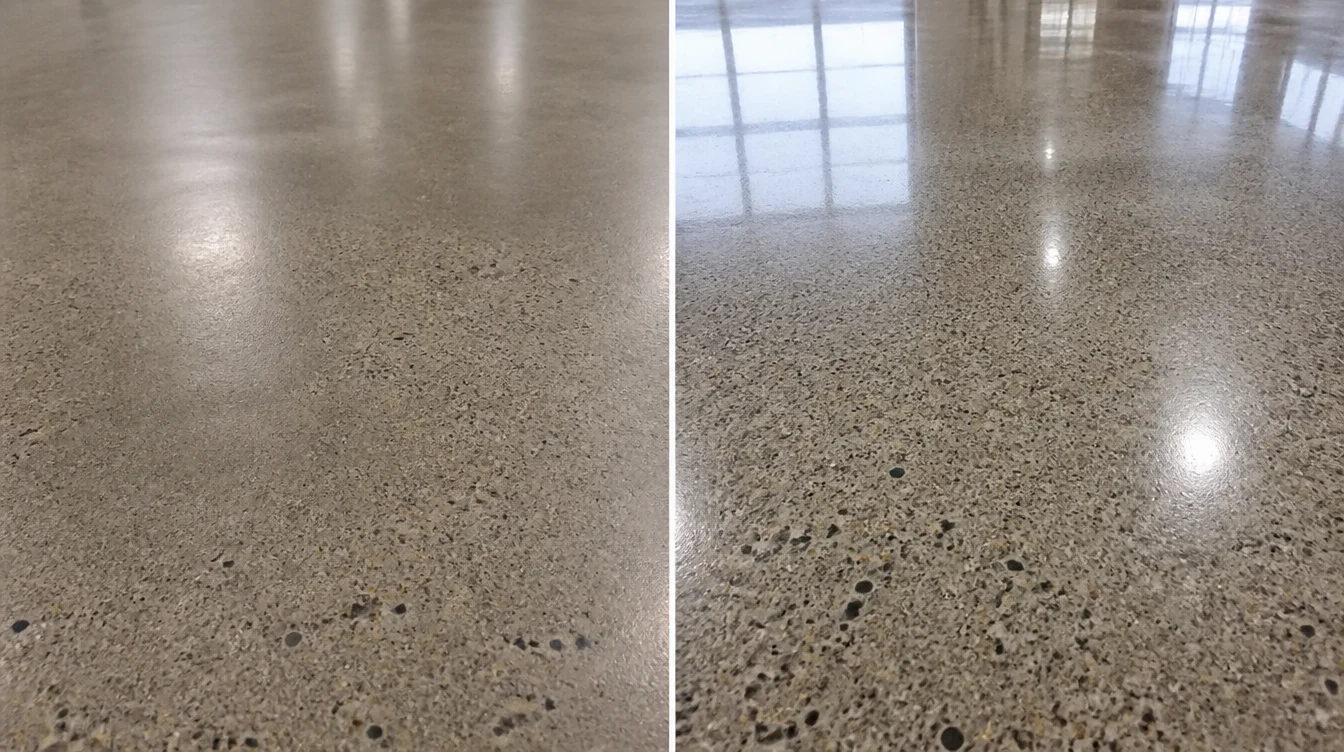
Polished concrete shine levels in Nashville range from a soft, understated satin finish to a mirror-like high gloss, and the difference isn't just aesthetic preference - each level is achieved through a different amount of diamond grinding and suits a different type of space. If you're comparing quotes or trying to describe the look you want, understanding how shine level actually works will help you land on the right finish for your property.
This is also one of the most common points of confusion when homeowners and business owners start comparing polished concrete quotes. Two contractors describing "polished concrete" can mean very different finished products if one is grinding to a satin level and the other to a high gloss - the terminology alone doesn't tell you what you're actually getting without understanding the underlying grit progression and process behind each result.
How Polished Concrete Gloss Levels Are Measured
Shine level in polished concrete is a direct function of how many progressively finer diamond grinding steps the floor goes through. The process starts with a coarser grit to level and open the concrete surface, then moves through a sequence of increasingly fine diamond abrasives - each pass refines the surface further and builds additional reflectivity.
- Around 400 grit - produces a matte-to-satin finish with light reflectivity
- 800 to 1500 grit - produces a semi-gloss finish with moderate reflectivity
- 3000 grit and higher - produces a high-gloss, mirror-like finish with strong reflectivity
Each additional grinding step adds labor and machine time to the project, which is why gloss level is one of the main cost variables in a polished concrete quote - a satin finish requires fewer total passes than a high-gloss result.
A densifying chemical treatment is typically applied partway through the grinding sequence, hardening the surface and closing its pores before the finer polishing steps begin. This step matters for durability regardless of which final gloss level you choose - it's not an optional upgrade reserved for high-gloss floors, but a standard part of the process that makes the final surface abrasion-resistant at any shine level. Skipping densification to save time or cost is one of the more common shortcuts that shows up later as a floor that dulls or dusts faster than it should.
Satin Finish: Best Applications
A satin finish provides a clean, understated look without the strong glare a high-gloss surface produces under bright overhead lighting. It's the most common choice for spaces where a subtle, professional appearance matters more than maximum visual impact.
Satin finishes also tend to hide minor surface variation and foot traffic wear more effectively than a high-gloss surface, since less light reflects off small imperfections. For spaces with heavy daily use - a busy office corridor or a warehouse floor that sees constant foot and equipment traffic - that forgiving quality is a practical advantage on top of the lower upfront cost.
High-Gloss Finish: Best Applications
A high-gloss finish reflects light dramatically, making a space feel brighter and larger while creating a genuinely premium, showroom-quality look. This is why retailers, hospitality venues, and clients focused on visual impact consistently choose the higher end of the gloss spectrum, even though it costs more to achieve.
The tradeoff with high-gloss finishes is that surface imperfections and everyday wear show up more visibly than on a satin floor, simply because there's more reflectivity to highlight them. This doesn't mean high-gloss floors are less durable - the underlying concrete strength and densification are the same regardless of shine level - but scuffs and dust are more noticeable, which typically means a slightly more frequent cleaning routine to keep the mirror-like appearance looking its best year-round.
Where high-gloss earns its cost: Retail stores, restaurant dining areas, and hotel lobbies use high-gloss polished concrete specifically because the reflectivity amplifies natural and overhead lighting, making the space feel more expansive and polished to anyone walking in.
Choosing the Right Shine Level for Nashville Spaces
The right shine level depends on how the space is used and lit, more than personal taste alone. A boutique retail space in The Gulch benefits from the visual drama of high gloss under bright storefront lighting, while a Nashville medical office or corporate space might prefer the calmer, glare-free look of a satin finish under standard fluorescent lighting.
Residential applications follow similar logic on a smaller scale. A polished concrete basement or living space benefits from the same considerations as a commercial interior - a satin finish tends to feel warmer and more livable in a residential setting, while some homeowners specifically want the dramatic reflectivity of high gloss for a modern, loft-style aesthetic. There's no universally "correct" choice; it comes down to how the space is meant to feel and function day to day.
| Space Type | Recommended Shine Level |
|---|---|
| Office / corporate | Satin to semi-gloss |
| Warehouse / industrial | Satin |
| Retail / boutique | Semi-gloss to high-gloss |
| Restaurant / hospitality | High-gloss |
Lighting conditions in the actual space matter as much as the use case - a high-gloss finish under harsh overhead fluorescent lighting can create glare that a semi-gloss finish avoids while still looking polished. This is exactly the kind of detail worth discussing during an on-site consultation rather than choosing a gloss level from a photo alone, since the same finish can look and behave differently depending on the specific lighting fixtures and window placement in your space.
Natural light exposure is another factor worth considering, particularly in Nashville spaces with large storefront windows or skylights. Direct sunlight hitting a high-gloss floor at certain times of day can create intense glare that's more noticeable than the same light on a satin surface - something worth walking through at different times of day if your space gets significant natural light before finalizing a gloss level, especially for west-facing storefronts that see intense afternoon sun.
Maintenance expectations should factor into the decision too. High-gloss floors generally benefit from periodic burnishing to maintain their peak reflectivity, while satin finishes hold their appearance with simpler routine cleaning. Neither requires the sealing or waxing schedule that other flooring types demand, but the difference in upkeep between gloss levels is worth discussing upfront if your facility has limited janitorial staff or a tight ongoing maintenance budget to work within.
See our concrete polishing Nashville page for the full grinding and polishing process, and our polished concrete floors Nashville page for more on finish options. Either way, an on-site walkthrough with actual sample panels under your space's real lighting remains the most reliable way to choose with confidence before committing to a full installation.
Since gloss level is a major cost factor, see our polished concrete cost breakdown for how these choices translate into pricing.