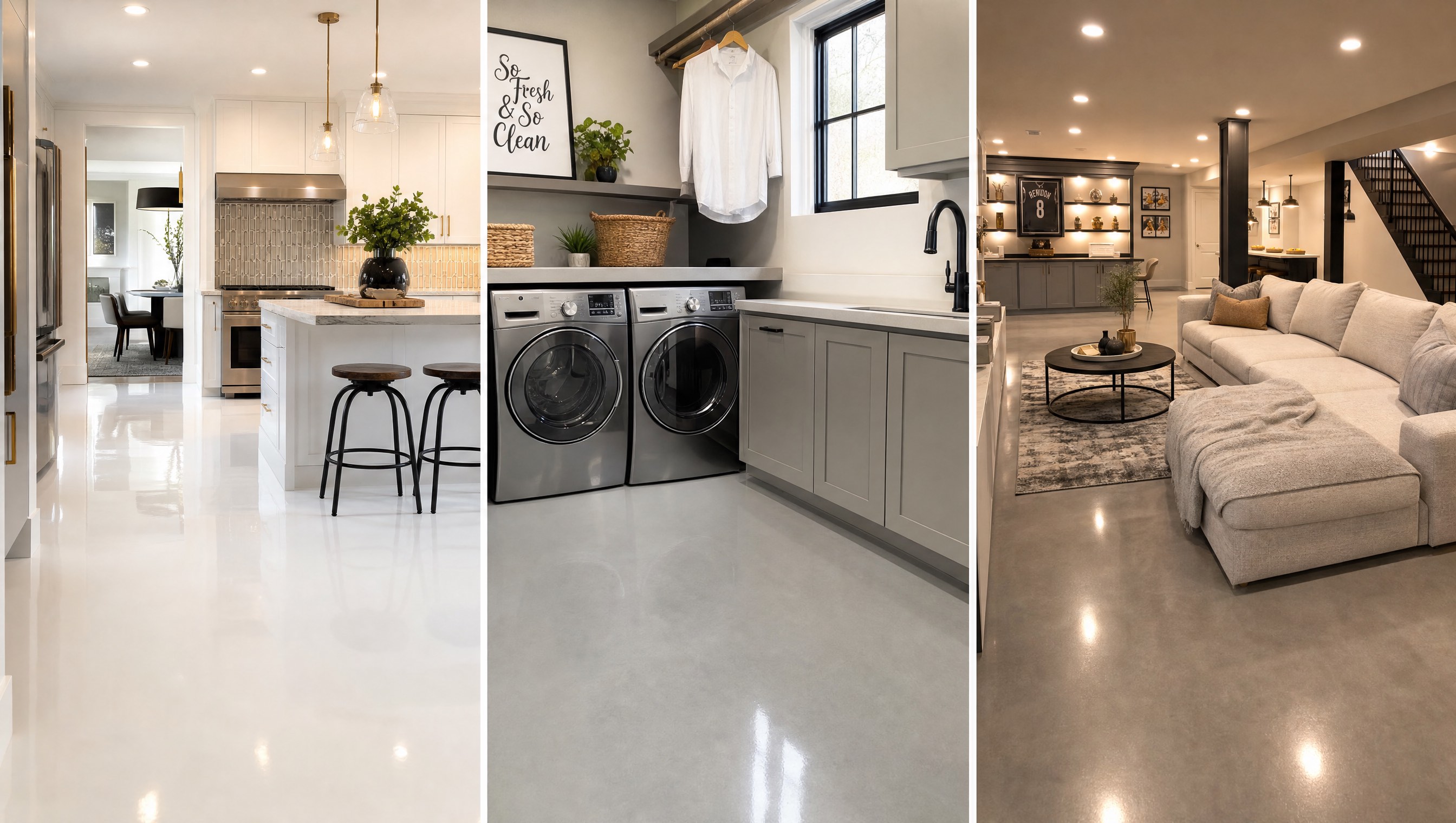
Most Nashville homeowners think of epoxy flooring as a garage-only product. That's changing. Kitchens, laundry rooms, and basements throughout Nashville are increasingly finished in seamless epoxy - for the same reasons that made it popular in the garage: durability, easy cleaning, and a finished look that outlasts tile or vinyl. This guide covers where residential epoxy flooring Nashville works well inside the home, what to expect from installation, and what it costs by room.
Residential Epoxy Flooring Beyond the Nashville Garage
Epoxy's core advantages - a seamless, non-porous, chemical-resistant surface - apply just as well inside the home as they do in a garage. Nashville homeowners are extending epoxy into interior rooms for practical reasons:
- No grout lines - unlike tile, epoxy has zero seams where dirt, moisture, and bacteria can accumulate, a meaningful advantage in kitchens and bathrooms
- Waterproof surface - properly installed epoxy is fully waterproof, protecting the concrete slab beneath from spills, leaks, and appliance failures
- Easy maintenance - a damp mop is typically all that's needed; no grout sealing, no wax stripping, no specialty cleaners
- Design flexibility - from clean solid colors to decorative flake and metallic finishes, epoxy adapts to a range of interior design styles
Epoxy Floors for Nashville Kitchens: Is It Practical?
Yes - epoxy works well in kitchens, with a few practical considerations. The seamless surface is genuinely advantageous over tile for a kitchen environment: no grout lines to stain or scrub, and complete resistance to grease, food spills, and standing water.
Two things to plan for:
- Slip resistance - a smooth epoxy topcoat can be slippery when wet. Specify an anti-slip aluminum oxide additive in the topcoat for kitchen applications, especially near sinks and dishwashers
- Installation downtime - kitchen epoxy requires appliances to be moved out and the space cleared for 1–2 days during application and initial cure, which is a bigger disruption than a garage project
Laundry Room Epoxy Flooring Nashville: Waterproof and Durable
The laundry room is arguably the single best interior application for residential epoxy. It's a small space (fast, affordable project), it sees regular water exposure from washer connections and potential leaks, and a seamless waterproof floor genuinely protects against water damage in a way that most flooring options don't.
Nashville Basement Epoxy Floors: Moisture and Mold Defense
Basement epoxy is where Nashville's climate becomes the central consideration. Nashville summers run 55–65% relative humidity on average, and basements - being below grade - trap and concentrate that moisture more than any other room in the house. This makes moisture testing before installation essential, not optional.
Correct basement epoxy floor Nashville installation requires:
- Moisture vapor testing - calcium chloride or plastic sheet testing to determine if the slab is transmitting moisture at a rate that will cause coating failure
- Moisture vapor barrier (MVB) primer - required when testing shows elevated moisture transmission, which is common in Nashville basements without exterior waterproofing
- Light color selection - light gray, white, or light beige epoxy visually brightens a basement and helps offset the naturally lower light levels below grade
Basement moisture warning: Skipping moisture testing on a Nashville basement is one of the most common causes of residential epoxy failure. If your basement has ever shown any signs of dampness, efflorescence (white mineral deposits), or a musty smell, moisture testing is mandatory before any epoxy installation is scheduled.
Residential Epoxy Flooring Cost Nashville by Room Type
| Room | Typical Size | Cost Range |
|---|---|---|
| Laundry room | 50–100 sq ft | $300–600 |
| Kitchen | 200–400 sq ft | $600–1,800 |
| Basement | 400–800 sq ft | $1,200–3,500 |
Basement pricing has the widest range because moisture vapor barrier requirements, existing floor condition (carpet or tile removal), and finished-space complexity vary significantly from home to home.