Polyaspartic vs polyurea comes up often once Nashville property owners move past the basic epoxy comparison and start researching the fastest-curing coating chemistries available. Both are genuinely fast-cure systems, both offer real performance advantages over standard epoxy, and both get used across different parts of the same commercial projects — but they're not interchangeable, and picking the wrong one for a given application can mean a harder installation or a floor that doesn't perform the way you expected.
Understanding where these two chemistries actually differ — not just in marketing language but in real installation and performance terms — helps Nashville property owners and facility managers make the right call for their specific project, whether that's a decorative garage floor or a parking structure waterproofing membrane.
Chemistry Differences Between Polyaspartic and Polyurea
Both polyaspartic and polyurea are aliphatic polyurea-family chemistries, which is part of why they get confused or lumped together. The key difference is in reaction speed and formulation: polyaspartic is engineered with a slightly slower reaction that gives installers a workable window for standard application methods, while pure polyurea reacts almost instantly, requiring specialized plural-component spray equipment that meters and mixes the two components at the point of application.
This difference in reaction speed cascades into nearly every other practical difference between the two systems — how they're applied, what equipment is required, and which applications each is best suited for.
Cure Time and Application Comparison
Polyurea's reaction happens in seconds to a couple of minutes, making it essentially impossible to apply with a standard roller or squeegee the way epoxy or polyaspartic can be — by the time it's mixed, it may already be curing before it's properly spread. This is why polyurea installation requires specialized plural-component spray rigs operated by crews trained specifically on that equipment.
| Factor | Polyaspartic | Polyurea |
|---|---|---|
| Working/pot life | Minutes, workable with standard tools | Seconds, requires spray equipment |
| Application method | Roller, squeegee, standard tools | Specialized plural-component spray rig |
| Cure to foot traffic | Hours | Minutes to hours |
| Typical crew requirement | Standard flooring crew | Specialized spray-certified applicators |
Polyaspartic's slightly longer working window is what makes it practical for decorative residential and commercial floors where a smooth, consistent, workable finish matters — you simply can't achieve the same level of surface control with a chemistry that cures in seconds.
Flexibility and Impact Resistance Comparison
Polyurea generally offers greater flexibility and elongation than polyaspartic, which is a major reason it's the preferred choice for waterproofing membranes on structures that experience movement — parking decks flex slightly under vehicle loads and thermal expansion, and a more flexible coating bridges small cracks and movement joints without cracking itself.
Polyaspartic, while still tougher and more impact-resistant than standard epoxy, is formulated more for a durable, attractive wear-layer finish than for maximum flexibility. This makes it the better choice where appearance and workability matter as much as raw flexibility — a decorative garage floor doesn't need to bridge structural movement the way a parking deck membrane does.
Which Nashville Applications Favor Each
For most residential and commercial decorative flooring projects across Nashville — garages, showrooms, retail spaces — polyaspartic is the more practical choice, offering fast cure and strong durability without requiring specialized spray equipment or crews. See our polyaspartic floor coating Nashville page for the full range of decorative and commercial polyaspartic systems we install.
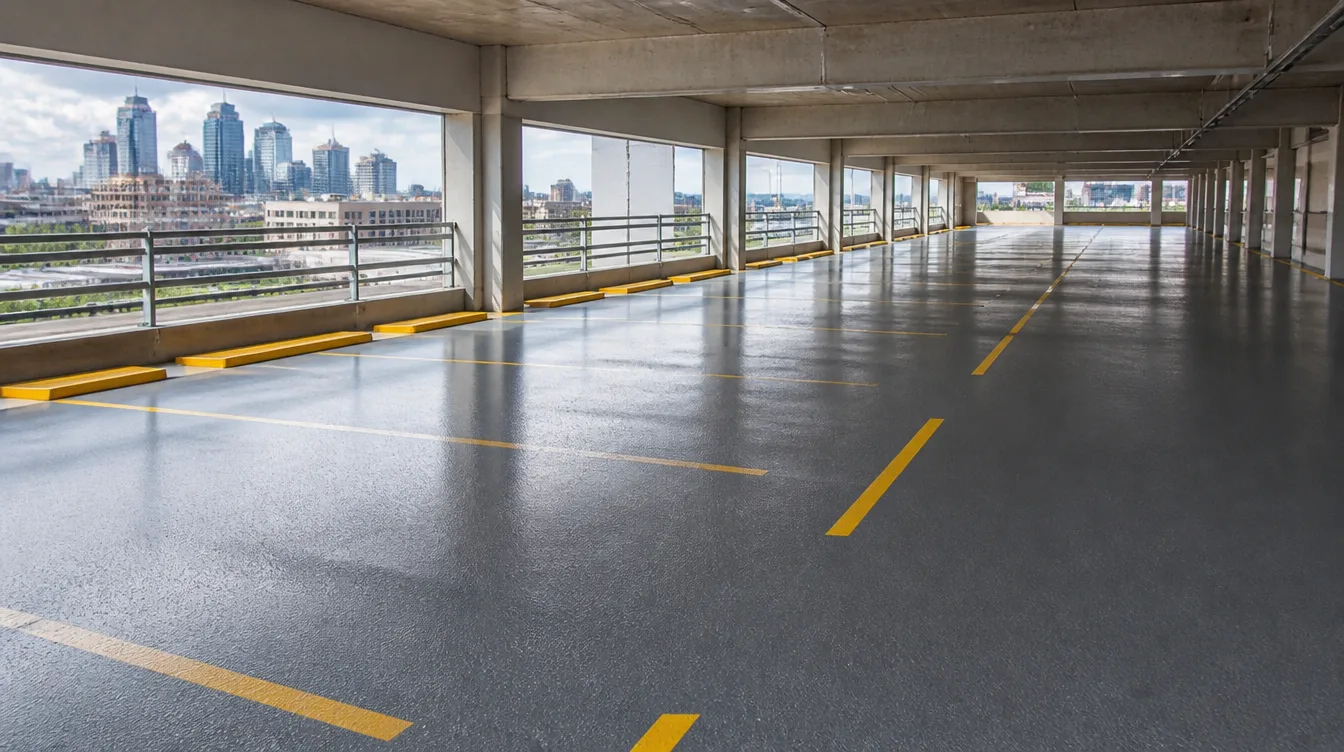
Polyurea earns its place specifically in waterproofing-critical applications: parking garage decks, balconies, and other structures where water infiltration and structural flexibility are primary concerns rather than decorative finish quality. Our polyurea floor coating Nashville page covers these industrial-strength waterproofing applications in more depth. Many Nashville parking structures actually use both chemistries together — a polyurea base for waterproofing and flexibility, topped with a polyaspartic wear layer for UV stability and a workable, durable finish. Our parking garage epoxy Nashville page covers the full range of deck coating systems, including these combined approaches, that we specify for Nashville parking structures.
Not sure which system fits your specific project? Get your Nashville floor coating recommendation from our team — we'll evaluate your application's specific requirements before recommending a chemistry.
UV Stability and Long-Term Color Retention
Both polyaspartic and polyurea are aliphatic chemistries, meaning both resist the UV-related yellowing that affects standard aromatic epoxy topcoats over time. This puts them ahead of standard epoxy for any application with direct sun exposure, but there are still meaningful differences between the two worth understanding for long-term appearance.
Polyaspartic topcoats are specifically engineered and widely used as UV-stable finish layers precisely because their formulation supports a smoother, more consistent, longer-lasting decorative appearance under sustained sun exposure. Polyurea, while also UV-resistant compared to standard epoxy, is more commonly specified as a functional waterproofing layer rather than a finish layer, which is exactly why many outdoor and sun-exposed structures use a polyurea base with a polyaspartic topcoat rather than relying on polyurea alone for the visible wear surface.
For Nashville's climate specifically: Summer sun exposure on outdoor decks, balconies, and parking structures makes UV stability a real practical concern, not just a marketing point — a coating that yellows or degrades under UV exposure needs replacement far sooner than one engineered to resist it.
Cost and Installation Complexity Considerations
Polyurea's specialized spray equipment and certified applicator requirements generally make it a more expensive and less widely available installation option compared to polyaspartic, which can be applied by a broader range of qualified flooring contractors using standard tools. This cost and availability difference matters when budgeting a project, since polyurea specialists may be less common and command a premium compared to the wider pool of contractors capable of installing polyaspartic systems well.
| Factor | Polyaspartic | Polyurea |
|---|---|---|
| Contractor availability | Widely available | Requires specialized applicators |
| Equipment cost | Standard flooring tools | Specialized plural-component rigs |
| Typical project cost | Moderate | Higher, due to specialized labor/equipment |
For most Nashville property owners comparing these two options, the practical decision often comes down less to a pure cost comparison and more to which chemistry actually fits the application — a decorative garage floor doesn't need polyurea's waterproofing flexibility, and a parking deck waterproofing membrane doesn't need polyaspartic's decorative finish quality. Choosing based on the actual functional requirement, rather than chasing the fastest possible cure time in isolation, leads to a better long-term outcome regardless of the upfront cost difference between the two systems.
Questions to Ask Your Nashville Contractor
Given how much the right chemistry depends on the specific application rather than a one-size-fits-all recommendation, a few direct questions during the quoting process help confirm you're getting the right system for your project rather than whatever a contractor happens to have on hand or prefers to install.
- What specific chemistry are you specifying, and why for my application? A contractor should be able to explain the reasoning, not just name a product.
- Is this a decorative finish, a waterproofing system, or both? This clarifies whether polyaspartic, polyurea, or a combined system actually fits your project's real requirements.
- What's the expected cure time before I can use the space normally? Cure time expectations should match the chemistry being proposed, and a mismatch is worth questioning.
- Do you have experience installing this specific system, especially for polyurea's specialized application requirements? Not every flooring contractor is equipped or trained for plural-component spray application.
A contractor confident in the distinction between these two chemistries — and willing to explain which one actually fits your project and why — is generally a strong signal of genuine technical expertise rather than a one-size-fits-all sales approach that defaults to whichever system is easiest or most profitable to install.